Micro Influencers: Who They Are and 6 Steps to Hire One
Quick answer
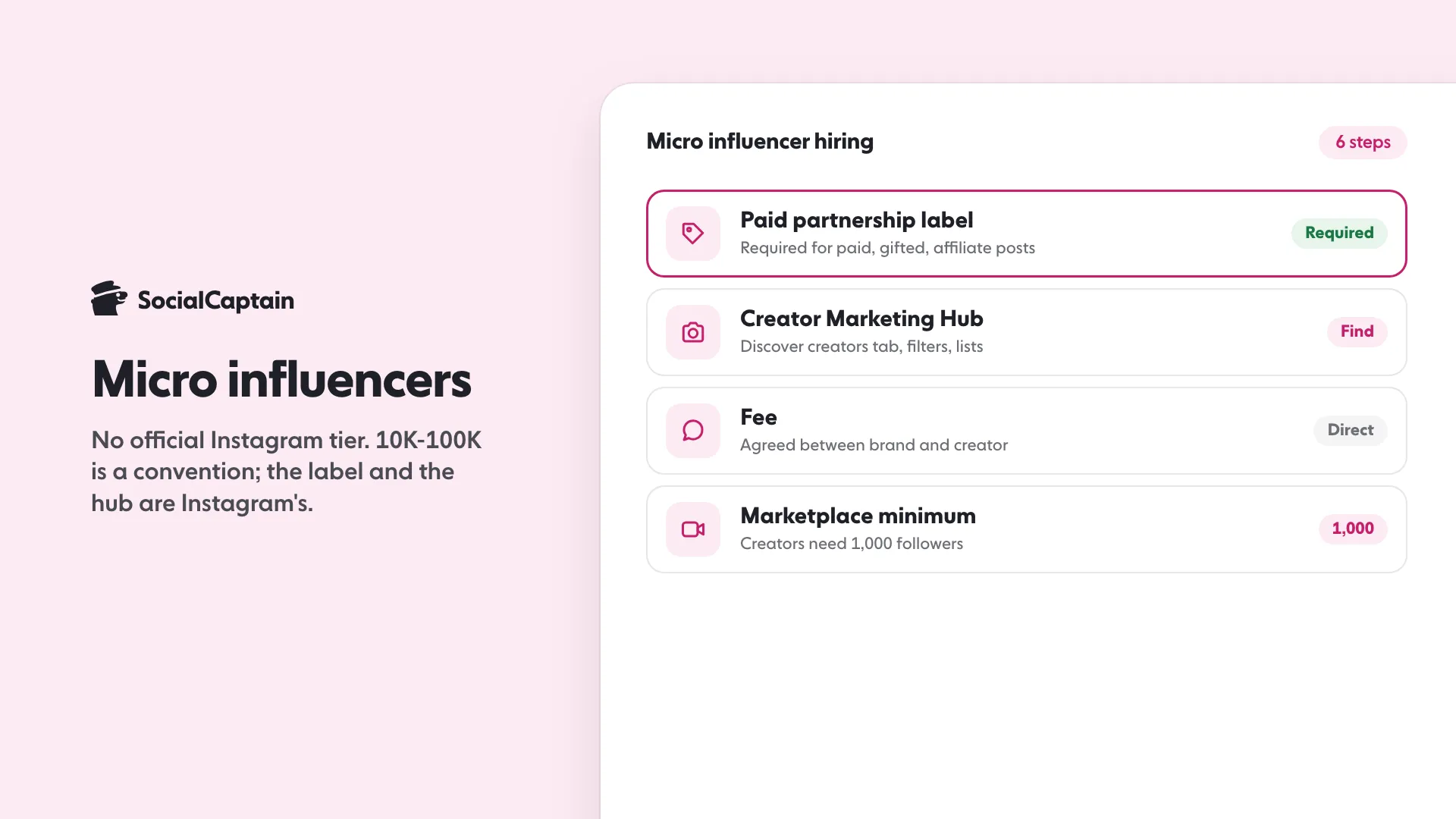
A micro influencer is usually a creator with 10,000 to 100,000 followers, but Instagram does not define the tier. To work with one, find creators in Meta Creator Marketing Hub, agree the fee directly, and have them use the paid partnership label.
- No official Instagram tier: 10K-100K is a convention.
- Paid partnership label required for paid, gifted and affiliate posts.
- Fees are agreed between brand and creator; Instagram sets none.
On this page8 sections
A micro influencer is a creator with a mid-sized, niche audience, most often put at 10,000 to 100,000 followers, but that range is a convention: Instagram does not define the tier. What Instagram does define is how a brand works with one. The creator uses the paid partnership label, the brand finds creators in Meta Creator Marketing Hub, and the two agree the fee between themselves. This guide covers who micro influencers are, what we could and could not source about their fees, how the label and the hub work, and 6 steps to hire one.
What is a micro influencer?
A micro influencer is a creator whose audience is big enough to matter to a brand and small enough to stay personal. The follower range is where writers disagree. A 2024 Kansas State University thesis on Gen Z micro-influencers describes them as content creators with “between 10,000 and 100,000 followers”, and it takes that figure from an industry report (Meltwater, 2022), not from research of its own. The same thesis says they are often experts in a specific industry, skill or topic.
Instagram’s own help pages do not use a tier name at all. The pages read for this guide talk about “creators” and “business partners”, and set rules by account type and by follower minimums for specific tools, never by “nano”, “micro” or “macro”. So treat the tier as a shorthand, and check where each writer or dataset draws its lines before you compare numbers.
The tier next door is covered in nano influencers, which owns the 1,000 to 10,000 range. This guide starts where that one stops.
| Question | What the sources say |
|---|---|
| Is “micro influencer” an official Instagram label? | No. Instagram’s help pages use “creator” and “business partner”. |
| What range is most quoted? | 10,000 to 100,000 followers, from industry reports and some academic work. |
| Who sets the range? | Nobody. It is an industry convention, and the lower and upper bounds move. |
| Does Instagram set a minimum for brand work? | Only for tools: Creator Marketplace asks for 1,000 followers. |
What do micro influencers charge?
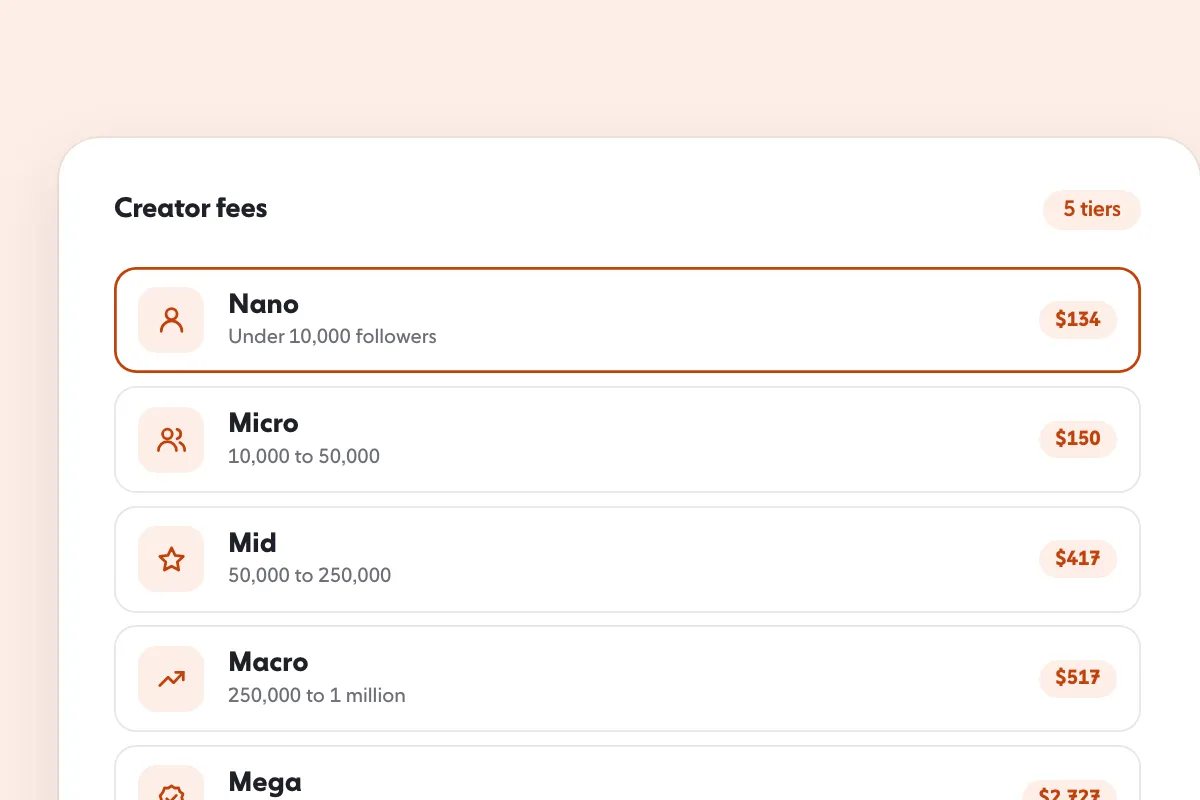
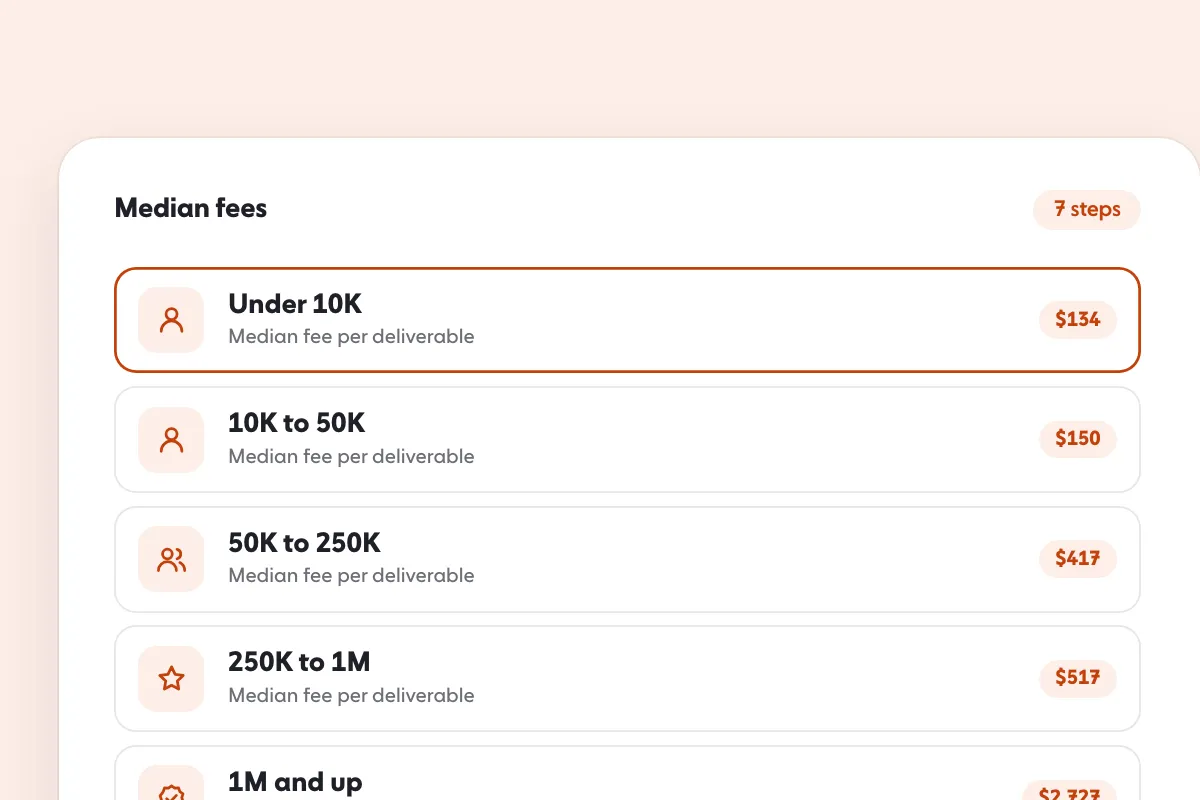
There is no primary source we could open that gives a fee table for micro influencers. Instagram, Meta and the FTC do not publish rates, and the pricing datasets that exist belong to companies that sell influencer software. The honest answer is that a micro influencer sets a price per deliverable, and it varies with the niche, the format, the usage rights and how much work the brief needs.
Two facts from Instagram’s own pages shape how fees are agreed:
- Instagram’s “Get started with branded content” page says it is up to you to discuss the terms with brand partners, and lists payments, the content to create and the date to post as the things to agree.
- Meta’s February 2024 announcement of Creator Marketplace says creators can review an opportunity’s details, requirements and rate within the app, so a rate is part of the offer a creator sees.
Payment is therefore between the brand and the creator. Instagram does not set it, hold it or guarantee it. If you want third-party fee numbers by tier, our own guides collect them with their dates and limits: how much Instagram influencers make and Instagram influencer marketing. Read those as single datasets, not as a price list.
How should you compare two micro influencer quotes?
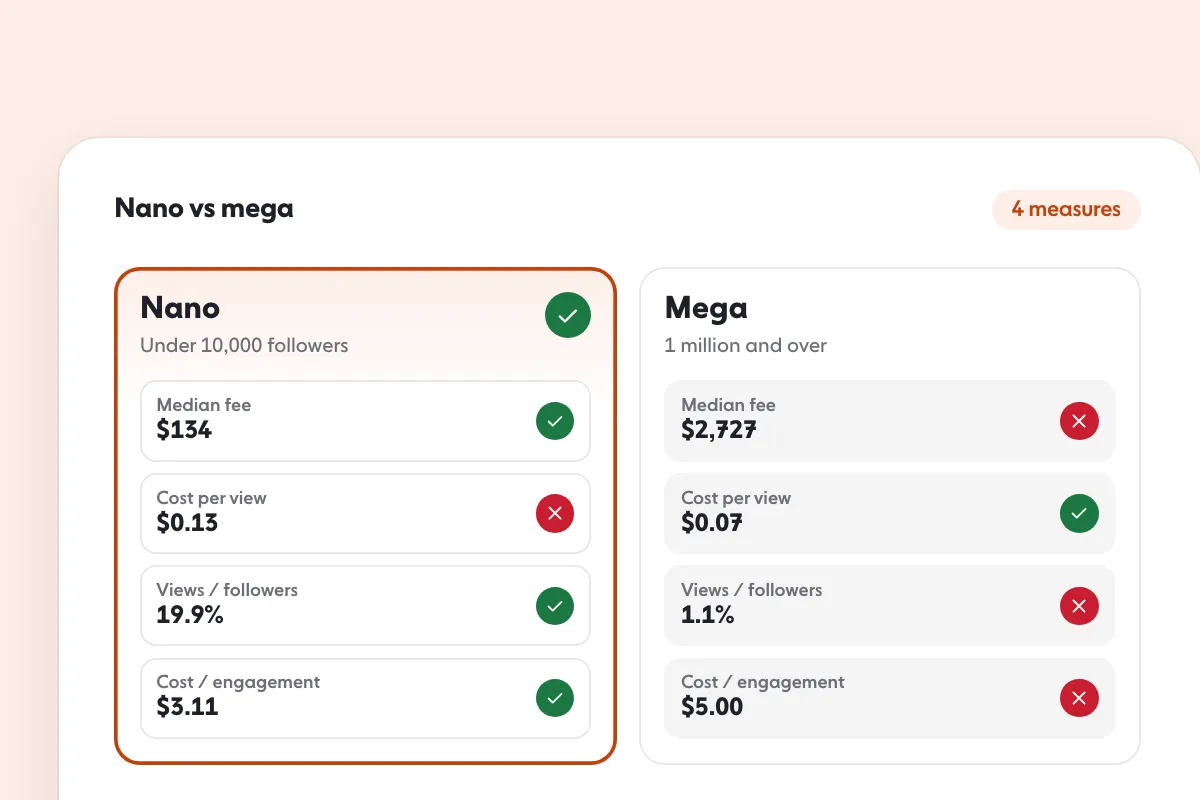
Do the sum yourself. Divide each fee by the views the creator’s recent posts of that type got, which gives a cost per view. Divide it by likes plus comments, which gives a cost per engagement. A cheaper creator with weak views can cost more per view than a pricier one with strong views. Ask each creator for screenshots of the insights of their last few posts so the views are theirs and not an estimate.
How does a brand work with a micro influencer on Instagram?
The process has 6 steps, and Instagram’s own tools cover steps 2, 4 and 5.
- Set the goal and the deliverable.
- Find creators in Creator Marketing Hub.
- Check that the audience is real and fits.
- Agree the terms and the paid partnership label.
- Give the creator permission to tag your business.
- Measure, then rebook or move on.
1. Set the goal and the deliverable
Decide what the post must do: sales, sign-ups, reusable photos or awareness. Then name one deliverable, such as a Reel, a feed post or three Stories. A vague brief gets a vague quote, and it makes quotes hard to compare. Write down what the creator must show, what they must not say, and the date.
2. Find creators in Creator Marketing Hub
Meta’s help page “Find creators to partner with on Meta Creator Marketing Hub” describes how a brand finds them. It says the feature is only available for business and creator accounts on Instagram, and that it may not be available to you yet.
- In Meta Business Suite, click Creator marketing on the left navigation bar, or in All tools below Advertising.
- Click Get started, follow the on-screen instructions and click Agree to the terms.
- Open the Discover creators tab on the left navigation bar. You see recommendations personalized to your brand.
- Narrow the list with AI-powered keyword search, or with filters such as interests, age and follower count. Filters can apply to creators and to target audiences.
- Click a creator card to see their profile: past and active partnership ads, branded content, past partners and metrics.
The follower-count filter is where you set your own micro influencer range. Pick the numbers that match your budget and goal, because no official range exists. A creator who joined Creator Marketplace shows more of their recent posts and more detailed insights to brands, which helps with step 3.
You can also save creators to a list with the bookmark icon on a creator card, then open View saved creators to see your lists. If you already work with some creators, upload a .csv file of their handles to see similar creators. To contact one, use the Contact button on the card, which either copies their email, if available, or sends a message. Conversations sit under Partnership messages in your Meta Business Suite inbox.
3. Check that the audience is real and fits
A micro influencer’s value is their audience, so check it. Look at three things: the engagement on their last 10 posts, whether the comments are specific to the post, and whether follower growth looks steady. The engagement rate calculator turns likes and comments into a rate, and how to calculate Instagram engagement rate explains the formulas.
Fake followers show up as generic comments, views far under the follower count and sudden jumps in the follower chart. Ask for a screenshot of their audience insights for country and age, and compare it with where your customers are.
4. Agree the terms and the paid partnership label
Put the terms in writing: the deliverable, the date, the fee or the product, who owns the content, whether you can reuse it in ads, and how long it stays up. Instagram’s help page on branded content leaves all of this to you and the creator.
Then agree on the label. Instagram’s page “What is considered branded content” says Meta’s Branded Content Policies require the paid partnership label whenever a creator posts branded content, and it defines that content as a creator or publisher’s content that features or is influenced by a business partner for an exchange of value. The page lists the cases:
| Situation | Paid partnership label? |
|---|---|
| A brand pays the creator to post content that features or mentions it | Yes: payment is an exchange of value |
| A brand sends or loans free products and the creator posts about them | Yes: a gift is an exchange of value |
| The post carries an affiliate product link | Yes: it earns commissions on sales |
| The creator promotes their own products | No: there is no brand partner, though legal disclosure duties may still apply |
Free product counts, so a “gifted” collaboration is not exempt. The US Federal Trade Commission says the same in its guide for influencers: a “material connection” includes a financial relationship, and you should “disclose the relationship if you got anything of value to mention a product”. The FTC also puts the duty on the influencer (“it’s your responsibility”), so brief your creators and check the posts, not only the contract.
The label has to be used each time. According to Instagram’s “Get started with branded content” page, the creator must tag the partner each time they post branded content, and adding the label is only available in the Instagram app. The label works in Feed, Stories, Live, Reels and Instagram videos, and the creator needs access to the branded content tools first.
5. Give the creator permission to tag your business
Instagram’s page “Give a creator permission to tag your business in branded content” gives the brand-side steps in the app:
- Go to your business profile.
- Tap Menu in the top right.
- Tap Business tools and controls, then Branded content.
- Tap the toggle next to Manually approve content creators.
- Tap Approved content creators, then search for and select the creator’s Instagram handle.
Once you allow a creator to tag your business, they do not need the paid partnership label to tag products in their post, story or reel. The same page adds that you can use the content to make a partnership ad.
On the creator’s side, Instagram says a request goes to the brand the first time the creator tags it. Until the brand approves, the post shows the paid partnership label without the brand’s name, and if the brand denies the request, the label is removed. Your partner must have a professional account on Instagram. Once you publish, the brand gets a notification and access to the content’s insights, and if the creator removes the brand from the label later, the brand is notified and stops seeing those insights.
6. Measure, then rebook or move on
Because the brand is tagged, the brand sees insights for the content. Record views, engagement and the sales or sign-ups you can trace to the post, then divide the fee by each to get your cost per view, per engagement and per result. Rebook the creators whose content worked and ask for a second format before you commit to a long contract.
If a post performs well, Meta’s 2024 announcement says advertisers can boost organic content as partnership ads, including posts with the paid partnership label. Instagram’s permission page adds that the creator can choose to allow business partners to boost their content into partnership ads, so agree this in step 4 and not afterwards.
What does a micro influencer need to join Creator Marketplace?
If you are the creator, the route to brands starts with Meta Creator Marketplace. Instagram’s help page lists four requirements: you must be at least 18 years old, have a professional, public Instagram account, have a minimum of 1,000 followers and agree to the partner monetization policies. It is available worldwide where Meta advertising operates, and not in Crimea, Cuba, Iran, North Korea, Syria or Russia.
Meta’s 2024 announcement says creators can indicate the brands and interests relevant to them and build a portfolio that brands can browse, and that brands can contact creators directly or send one project to several creators. A creator who already has 10,000 followers is well inside the 1,000-follower minimum, so for a micro influencer the hurdle is not the number but the fit. Instagram Creator Marketplace walks through joining it step by step, and how to get brand deals on Instagram covers the media kit and the pitch.
Micro influencer or bigger creator?
Instagram does not publish a comparison between tiers, and we found no government or research source that ranks them for cost or sales. What the sources do say is narrower. The Kansas State thesis, citing industry material, says micro influencers have a highly engaged community in a specific topic. That is a reason to try them for a niche product, and it is a hypothesis to test, not a result to rely on.
A fair test costs little: brief 3 creators of the same size and niche with the same deliverable, then compare cost per view and cost per result. Repeat with one larger creator if you want a comparison. Let your own numbers decide, because tier averages hide very different accounts.
How can a small account grow into the micro tier?
The tier is a convention, so there is no promotion to wait for. A creator grows into it the way any account grows: posting content that people in one niche want to follow, steadily, and being found. Instagram monetization lists Instagram’s own programs and their follower minimums, and how to become an Instagram influencer covers the first stretch.
When the limit is the size of the audience, adding followers who are real people from your niche, country and language is the honest way to speed it up, because a brand checks who follows you. SocialCaptain’s Instagram followers service does that, and the plans list what is included. Bought bots do the opposite: a brand’s vetting spots them, and they sink your engagement rate, which is the number a micro influencer is hired on.
FAQ
How many followers does a micro influencer have?
There is no official number. The most common convention is 10,000 to 100,000 followers, and a 2024 Kansas State University thesis uses exactly that range, citing an industry source. Some writers start the tier lower or end it higher, and none of Instagram’s own help pages define it.
How much does a micro influencer charge?
No platform, government or research body we could open publishes a fee table for the tier. Instagram says the terms, payments and posting date are for you and the creator to agree. Ask for a rate per deliverable, and compare offers by cost per view and cost per engagement.
Do micro influencers have to use the paid partnership label?
Yes, when the post is branded content. Instagram defines that as a creator’s content that features or is influenced by a business partner for an exchange of value, which includes a free product. A post promoting your own products does not need the label.
How do brands find micro influencers on Instagram?
Through Meta Creator Marketing Hub. In Meta Business Suite a brand clicks Creator marketing, then Get started, then opens the Discover creators tab, where it can use keyword search and filters such as interests, age and follower count.
Are micro influencers better than big influencers?
It depends on the goal. A micro influencer usually reaches a narrower, closer audience; a larger creator reaches more people. We found no primary dataset that ranks the tiers, so test with a small paid brief and compare the results.
Can a micro influencer have fake followers?
Any account can. Check that comments are specific, that views and likes fit the follower count and that follower growth is steady, and ask for the creator’s own insights screenshots before you agree a fee.
Sources
- What is considered branded content help.instagram.com
- Get started with branded content on Instagram help.instagram.com
- How to use the paid partnership label to tag organic branded content on Instagram help.instagram.com
- Give a creator permission to tag your business in branded content help.instagram.com
- Find creators to partner with on Meta Creator Marketing Hub help.instagram.com
- Eligibility requirements for creators on Meta Creator Marketplace help.instagram.com
- Making it Easier for Brands and Creators to Collaborate on Instagram about.fb.com
- Disclosures 101 for Social Media Influencers ftc.gov
- The Gen Z micro-influencer experience krex.k-state.edu
Related guides
Written by Lena Ashby
Creator business and analytics editor
Lena Ashby covers the business side of Instagram on the SocialCaptain blog: Insights and engagement rates, when to post, content plans and how creators earn. Each article says where its figures come from and lists its sources at the end.
All articles by Lena Ashby


